

On the Road with Robert from CANVEC and On The Road Québec
In the trucking industry, some realities are difficult to explain with just a few pictures. To understand the work involved in recovering a semi-trailer, you need to climb into the truck, follow the safety checks and watch the manoeuvres in the field.
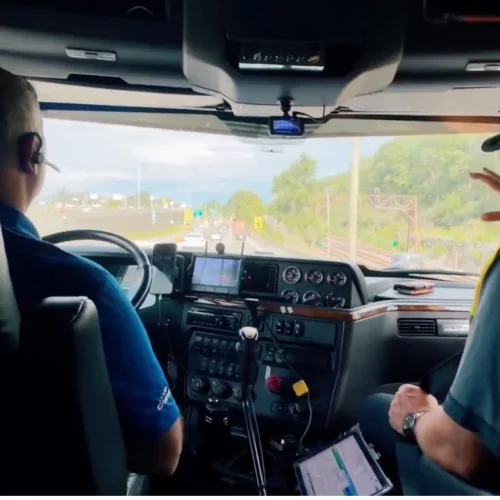
That is exactly what Francis and Carl from On The Road Québec did when they accompanied Robert, a driver at CANVEC, during a real day on the job.
The mission sounds simple: recover a storage trailer at the end of its rental contract and bring it back to CANVEC. However, when the truck and trailer measure approximately 65 feet in total, even a simple turn requires careful planning.
In this video, Robert introduces his truck, explains how his towing equipment works and shares his perspective on the profession. The team also discusses Montreal traffic, road safety and the next generation of transportation professionals.
Watch the full video with Robert, Francis and Carl.
 A Real Mission on the Road
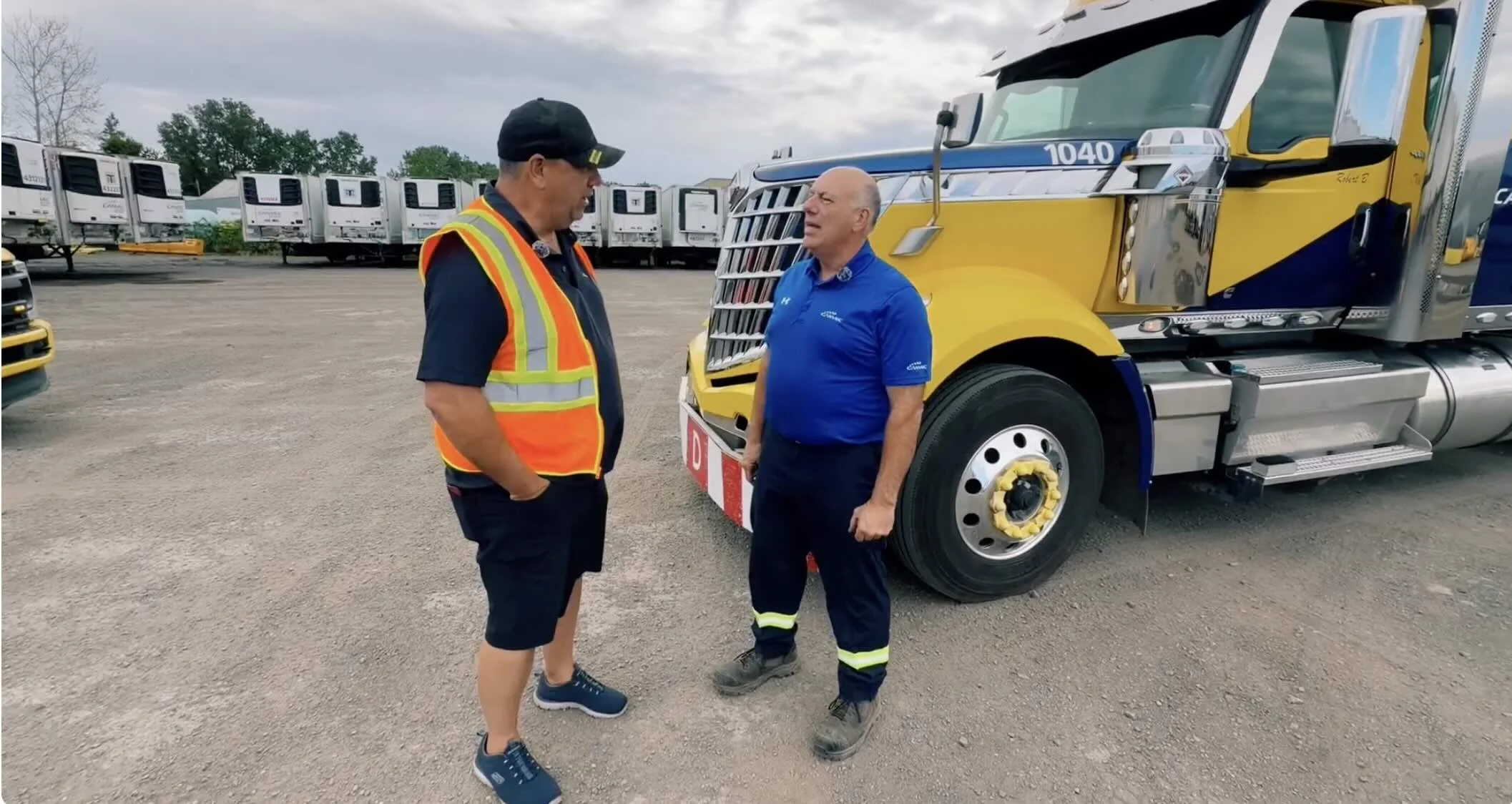
The day begins at CANVEC, where Robert welcomes Francis and Carl aboard his truck. Their mission is to visit a customer and recover a storage trailer whose rental contract has ended.
Robert has worked at CANVEC for four years, but his experience in transportation goes back much further. Before joining the team, he sometimes completed as many as 25 stops per day. His work is different today: fewer stops, but more specialized manoeuvres and equipment requiring constant attention.
For Robert, CANVEC’s family-oriented atmosphere remains one of the company’s greatest strengths, even as it continues to grow and serve customers across Canada.
“It feels like a family. It’s truly a great team.”
This close relationship between team members has been part of CANVEC’s culture for more than 35 years. It also helps maintain the level of expertise and service regularly recognized by customers.
A Truck Designed to Recover Trailers
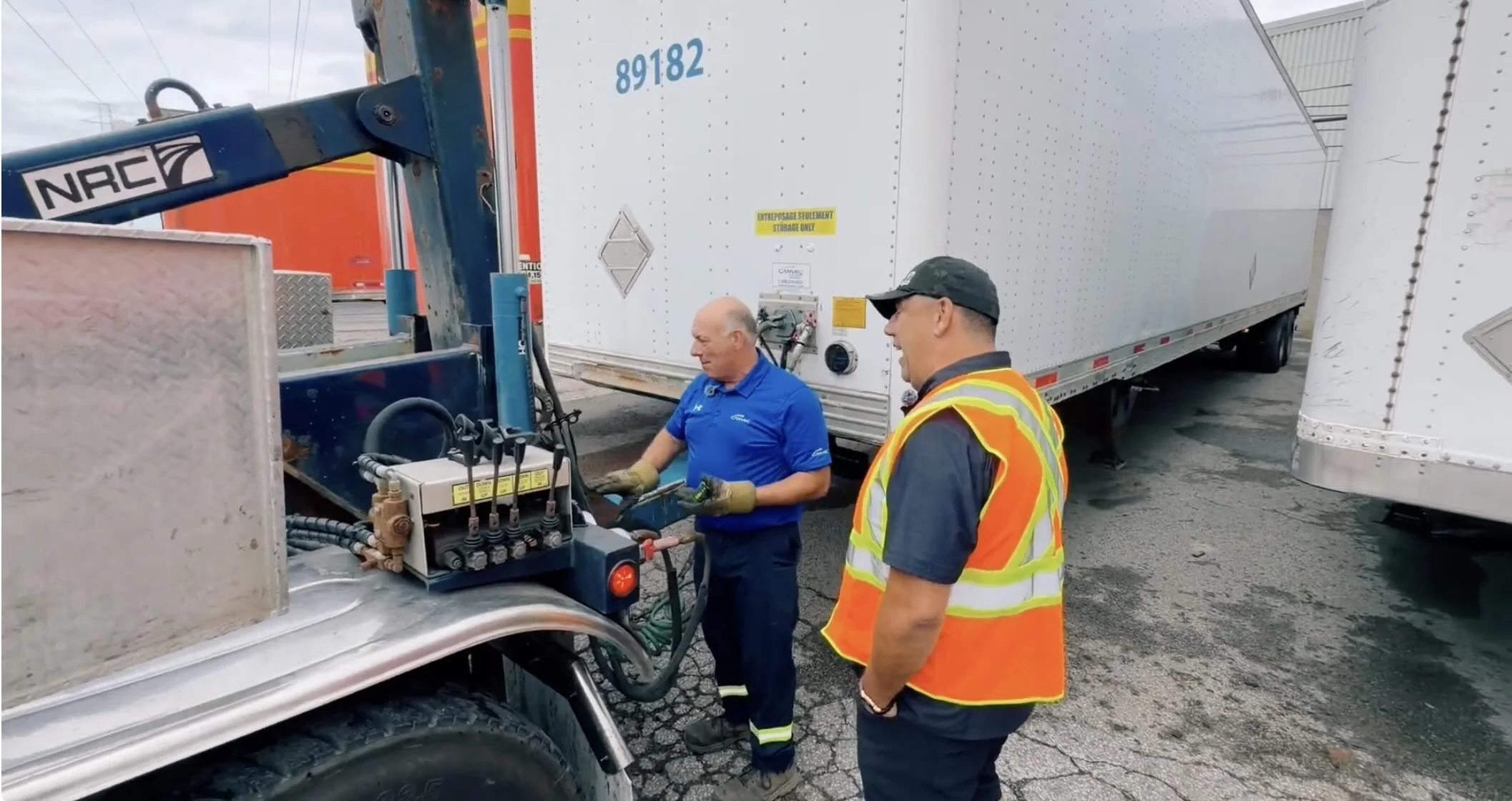
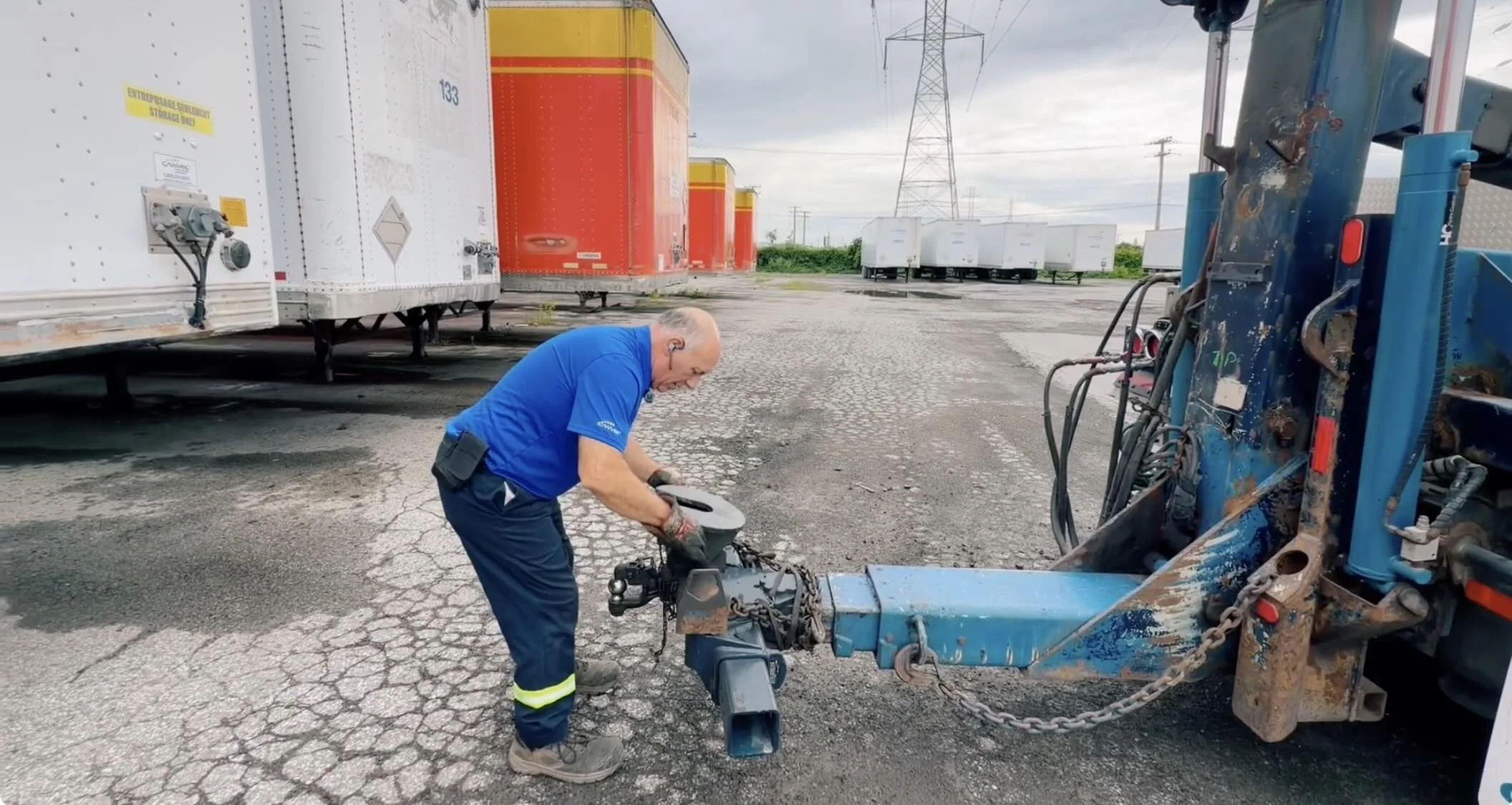
Robert’s truck is equipped with a removable towing system that transforms it into a trailer recovery vehicle. Once installed, the system can lift and tow an empty trailer to a terminal or repair shop.
The truck produces 550 horsepower and features an 18-speed transmission. Its towing equipment has a lifting capacity of 35,000 pounds and can pull up to 80,000 pounds.
There is one important rule for this type of work: recovered trailers must be empty. Robert does not transport the customer’s cargo. His job is to move the equipment itself.
Once attached to the truck, a 53-foot trailer can create a combination measuring approximately 65 feet. This additional length completely changes how the driver must turn, reverse and assess the available space.
At first glance, it may appear to be nothing more than a trailer attached to a truck. In reality, every movement must be carefully calculated. Let’s just say that parking it is not quite like stopping at the grocery store.
Watch Robert introduce his truck and towing equipment in the video.
 Experience Behind Every Manoeuvre
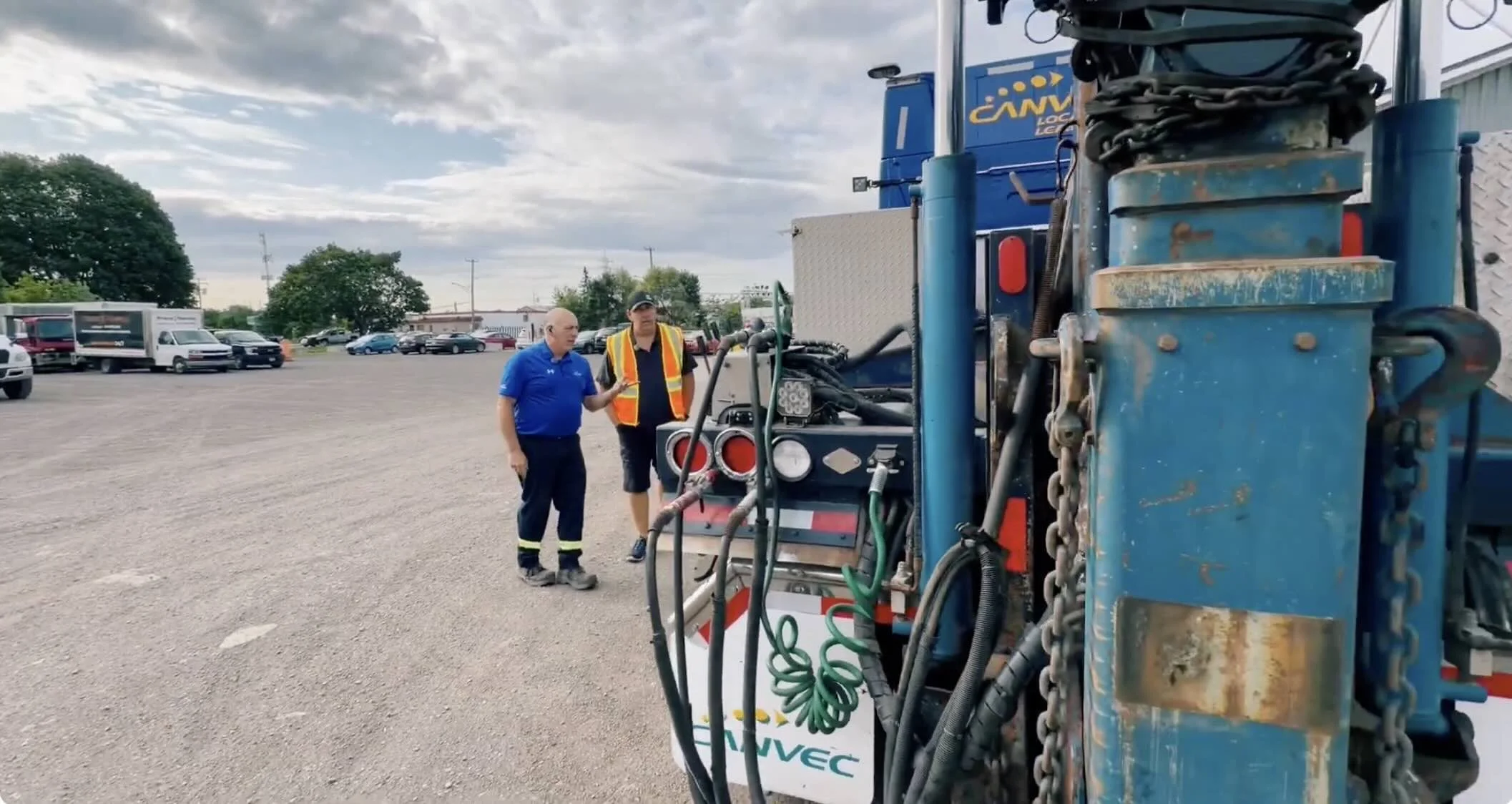
When Robert arrives at the customer’s location, he begins by adjusting the height of his equipment before backing under the trailer. He then installs the attachment devices, checks the locking points and calculates the distance between the trailer and the truck’s structure.
Several factors must be considered:
- the trailer’s height;
- the slope of the ground;
- the distance between the trailer and the lifting system;
- the signal lights;
- the condition of the brakes and suspension;
- the front and rear clearance required when turning.
Robert also uses measurements he has developed through experience. In certain configurations, he maintains a specific amount of clearance to reduce the risk of the trailer coming into contact with the towing equipment.
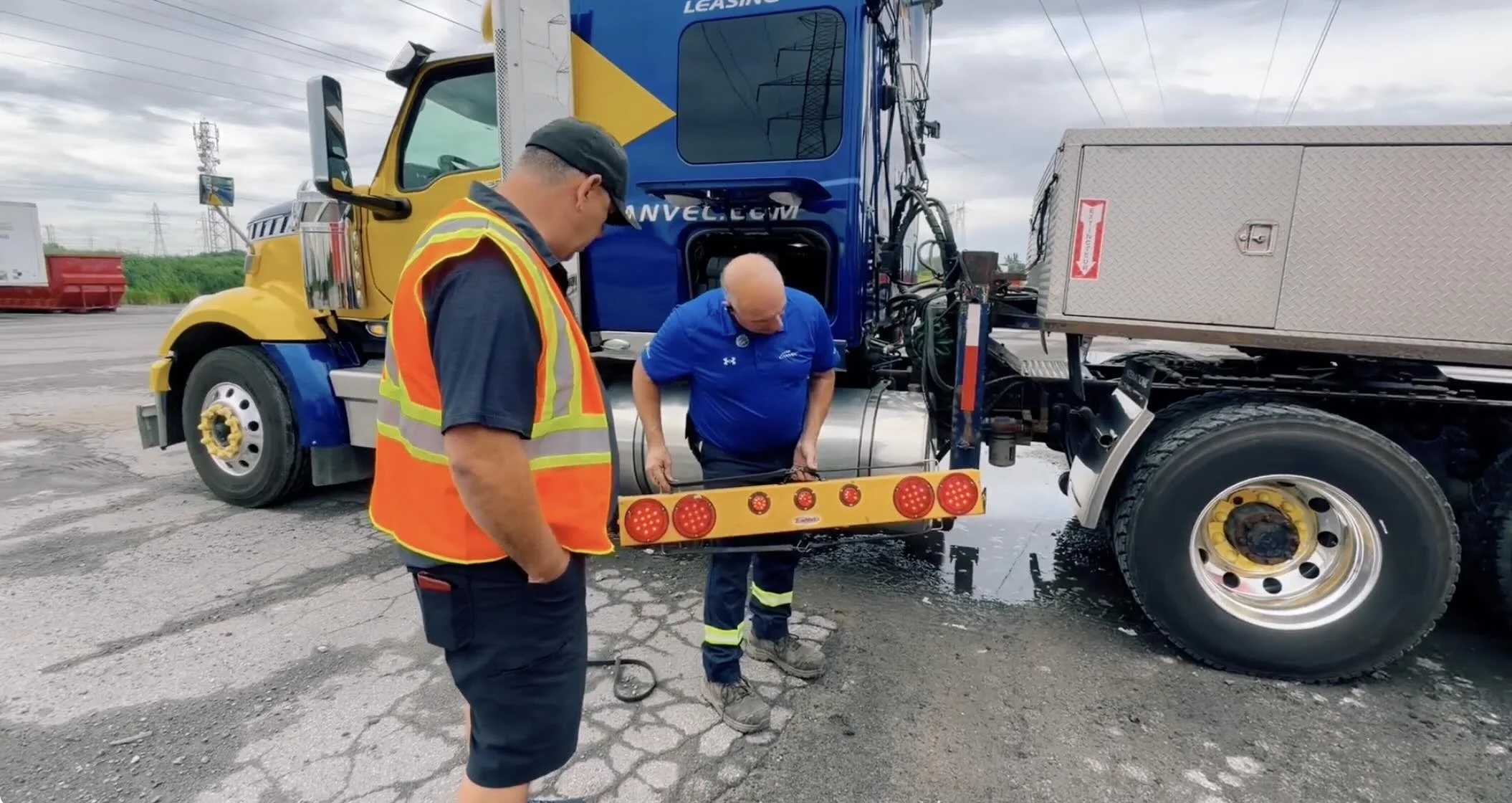
Before leaving, he checks the lights, brakes, landing gear, locking system and safety markings. Because the truck and trailer combination exceeds the usual length, additional flags and lights must also be installed.
“It’s part of my inspection. I make sure everything is locked, that the landing gear is secure and that my lights and brakes are working.”
The video shows each of these steps and, more importantly, demonstrates why Robert’s experience makes such a difference.
 Driving in Montreal Traffic
A significant part of the conversation with Francis and Carl focuses on another unavoidable aspect of the profession: traffic in the Greater Montreal Area.
According to Robert, rush hour is far less predictable than it used to be. Drivers were once able to plan their trips around specific peak periods. Today, traffic can remain heavy throughout much of the day.
This reality reduces the number of trips a driver can complete and increases transportation costs. Fuel continues to be consumed, driving hours accumulate and subsequent deliveries sometimes need to be reorganized.
Robert must therefore know the major highways while also being able to adjust his route quickly. Highway 440, Highway 13, Highway 30, the Samuel De Champlain Bridge and the Louis-Hippolyte-La Fontaine Tunnel each present their own challenges.
With a 65-foot truck and trailer combination, the shortest route is not always the most efficient one.
Robert’s Message to Motorists
The discussion becomes especially important when Robert explains what motorists sometimes misunderstand about heavy trucks.
A truck cannot stop like a car. When a truck driver leaves space between the truck and the vehicle ahead, that space is not an invitation for another vehicle to merge into the gap. It gives the driver the room needed to slow down and react safely.
“If I leave space between my truck and the vehicle ahead of me, it’s because I need it.”
Robert also emphasizes the importance of looking far ahead, maintaining a safe following distance and putting the phone away. From his position high above the road, he regularly notices drivers looking at their devices instead of paying attention to traffic.
His message is simple: truck drivers continuously monitor the movements of the vehicles around them, but road safety remains a shared responsibility.
To hear his advice and the examples he shares with Francis and Carl, watch the complete episode on YouTube.
One Company for a Wide Range of Needs
During the trip, Robert also introduces the wide range of services offered by CANVEC.
The company’s fleet includes dry van trailers, refrigerated trailers, flatbeds, extendable trailers, container chassis, straight trucks and various types of specialized equipment.
Businesses can explore CANVEC’s short-term truck and trailer rental options or discover the different types of transportation equipment available from CANVEC.
CANVEC’s services go far beyond rentals. The company also offers:
- mechanical services for trucks and trailers;
- inspections;
- refrigerated trailer repairs;
- hydraulic services;
- liftgate sales, installation and repairs;
- equipment recovery services;
- roadside assistance throughout Canada.
When a breakdown can be repaired on-site, CANVEC’s technicians perform the work directly on the road. If the problem is too extensive, the equipment can be recovered and transported to the repair shop.
Carriers can therefore centralize several needs with a single partner, whether they require roadside assistance for trucks and trailers or complete liftgate sales, installation and repair services.
Customers regularly express their appreciation for this approach. A Google review published by Lorena Gruescu states:
“Thank you to the CANVEC team for the excellent service. Special thanks to Mélanie, the parts clerk, who is always smiling!”
At the time of publication, CANVEC had a rating of 4.7 out of 5 based on approximately 140 listed reviews. This recognition reflects the importance the company places on service and customer support. View CANVEC’s profile and customer reviews.
Returning and Inspecting the Trailer
After recovering the trailer, Robert begins the return trip to the terminal. Along the way, the team passes through an inspection station, allowing Francis and Carl to observe the process followed when towing an empty trailer.
Once the equipment returns to CANVEC, the work is not over.
Every trailer returning from a rental undergoes a visual and mechanical inspection. The team checks the tires, brakes, structure and various safety components.
The trailer is not returned to service until all necessary inspections have been completed. This process helps maintain equipment reliability and ensures the next customer receives a unit that is ready for the road.
 A Profession Offering Many Opportunities
Near the end of the video, Francis and Carl ask Robert what he would say to young people considering a career in transportation.
For Robert, it is an interesting profession for people who enjoy staying active, seeing different places and taking on new challenges. No two days are exactly the same.
“You don’t work between four walls. You’re always outdoors, you meet your customers and you represent your company.”
The transportation industry also offers far more career opportunities than many people realize. Someone can work in local driving, long-haul transportation, LTL delivery or operate a dump truck, lowboy trailer or specialized vehicle. They may also pursue a career in dispatching, sales, mechanics or operations management.
According to Robert, the important thing is to enjoy what you do and understand that customer service is part of the job. A driver does more than move equipment: they also represent the company every time they arrive at a customer’s location.
Watch the Full Experience
This collaboration with On The Road Québec highlights a lesser-known side of CANVEC’s operations: the daily work performed by the people who move, inspect and maintain the equipment used by carriers.
Francis and Carl ask the questions many people have, while Robert explains his profession with simplicity, humour and plenty of experience.
However, the best way to understand his work is to see him in action.
To discover more videos, collaborations and team projects, visit the CANVEC news section.
About CANVEC
Founded in 1990, CANVEC specializes in truck and trailer rentals, 24/7 roadside assistance, as well as liftgate parts and services. Danny Lefebvre, President and Chief Executive Officer, has led the company for more than 35 years. Over the years, CANVEC has established itself as a true market leader. The company provides its many customers with more than 1,200 rental units, 24/7 roadside assistance, complete liftgate services, a parts store, qualified technicians and much more. With CANVEC, simplify your business and carry out your transportation operations under the best possible conditions. 🚚 QUICKLY BACK ON THE ROAD. BECAUSE EVERY MINUTE COUNTS. When you need tire repairs, a member of our team always answers your call directly, 24/7.
Social Media
Facebook: https://www.facebook.com/locationcanvec/
Instagram: https://www.instagram.com/canvecservice/
YouTube: https://www.youtube.com/@canvec
LinkedIn: https://www.linkedin.com/company/canvec-leasing-inc/
TikTok: https://www.tiktok.com/@canvecservice